I went on a visit to Komati power station a couple of years ago. The bank of solar panels in front of the old chimneys strike you as you arrive. It makes a great photo. A positioning of the clean energy future next to the old.
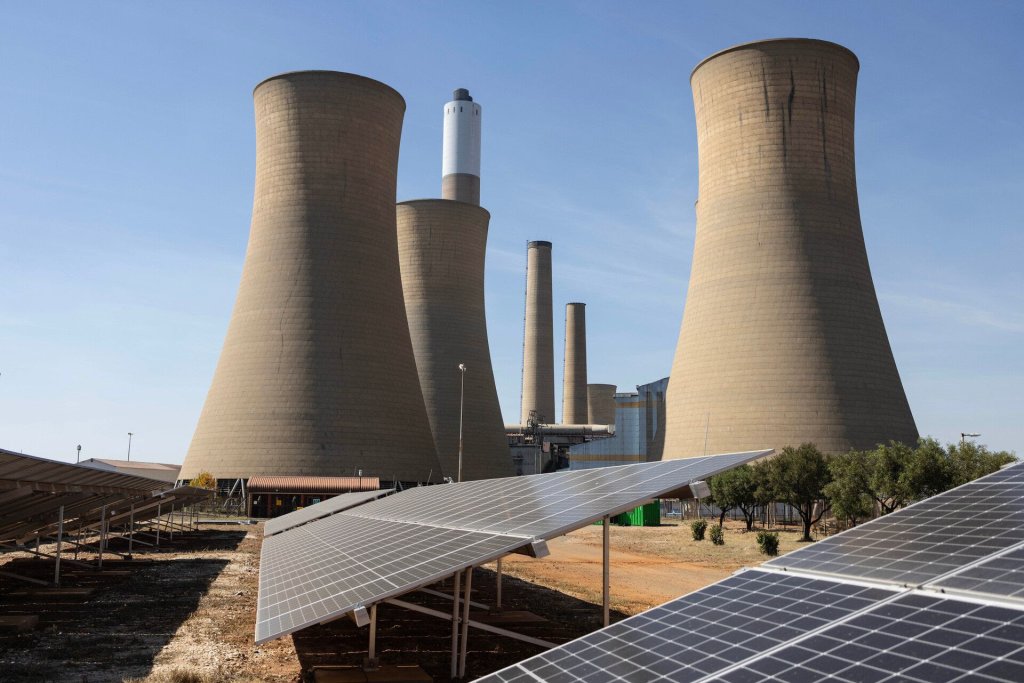
Komati is the first of Eskom’s coal stations to stop operating. The huge buildings are eerily silent. Inside, the giant machinery is weirdly beautiful: feats of engineering and craftsmanship. Stand still long enough and you can imagine what the place used to be like, filled with the clatter of machinery, the shouts of hard-hatted workers, their boots clattering on the metal stairs. They could turn the place into a museum.
Eskom’s plans to repower and repurpose Komati include a solar facility and battery storage. There’s also a trade school, an aquaponics pilot facility (we ate some of its greens in our lunch apparently) and a project to produce containerised solar power for remote off-grid communities. Projects to help cushion the shock to the community, provide skills training and offer new types of jobs.
But the station closed before any of those projects got off the ground. A lesson learned for other coal stations due to shut down.
Repowering old coal stations
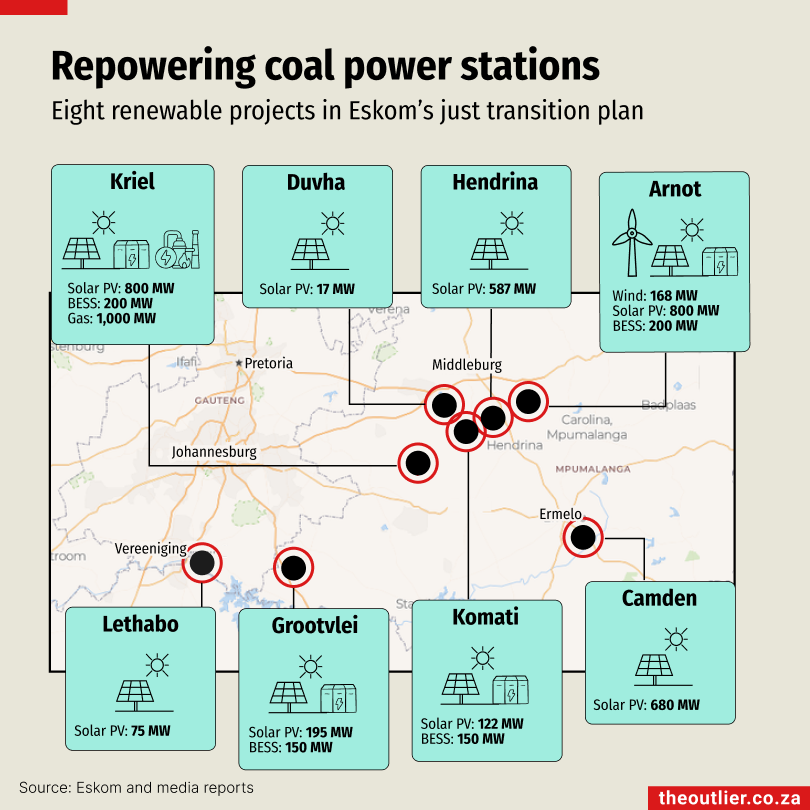
Komati is one of six older power stations where repowering projects have been approved as part of Eskom’s Just Energy Transition strategy. The others are at Grootvlei, Arnot, Camden, Hendrina and Kriel power stations (visual below).
Camden, Hendrina, Grootvlei and Arnot will continue operating until 2030 “to support energy security”, says Eskom. The “repowering and repurposing” (R&R as Eskom calls it) projects, however, will continue independently, not wait till the coal stations are decommissioned.
In its 2025 Integrated Report, Eskom says it plans to add 3,233 MW of renewable capacity through solar PV, wind, battery storage and synchronous condensers in the next four years, leveraging existing grid infrastructure.
It also estimates the programme will create 1,800 permanent and 16,000 temporary jobs, primarily in the renewable energy and manufacturing industries.
Renewable projects are also on the cards for other power stations, such as Lethabo and Duvha.
In the past six months Eskom has put out two invitations to tender for renewable projects at coal stations. The latest is a 17 MW solar plant at Duvha, near eMalahleni. Eskom put out an invitation to tender in December for the design, construction and operation of the facility. (The closing date is soon, 30 January.)
In July 2025, Eskom issued a tender invitation for a 72 MW plant at Komati. A request for proposals was expected to be issued in November 2025.
At Lethabo power station, Eskom issued an invitation to tender for the design, construction and operation of the 75 MW solar facility, in April 2024. In November 2024, Nersa awarded Eskom a generation licence for the facility.
NEWS WRAP
⚡️ Do you really have to register your solar system? Eskom is pushing people to register their systems by the end of March. But in an interview with Moneyweb, energy expert Chris Yelland said threats to cut off people who haven’t registered their systems are unlawful. It’s less about safety and more about Eskom trying to reduce its commercial risk as demand for its electricity decreases, he said. This decrease is exacerbated by energy-intensive users like smelters shutting down because of high electricity prices, he said.
⛏️ The price of electricity is also pushing mining companies to shift towards renewables, said André Lourens, an economist at the Minerals Council South Africa. What started during loadshedding to secure energy supply is now more about offsetting the high costs of electricity. Plus investing in cheaper renewables helps to offset carbon taxes and the cost of Europe’s Carbon Border Adjustment Mechanism (CBAM), which came into effect this year.
💰 Nersa is expected to announce what South Africans will pay for electricity in 2026 on or around 30 January.
🔋 ☀️ Scatec has signed a power purchase agreement with the Egyptian Electricity Transmission Company for a total capacity of 1.95 GW of solar and 3.9 GWh of battery storage in Egypt.
🥘 DEG, the German development finance institution and a subsidiary of KfW Group, announced a €30-million loan to Africa Go Green Fund. Cygnum Capital manages the fund, which invests in energy efficiency, clean cooking, electric mobility, green buildings and distributed energy solutions.
☀️ Abu Dhabi-based Masdar has signed a power purchase agreement with Angola’s state-owned Rede Nacional de Transporte de Electricidade (RNT-EP) for its 150 MW Quipungo PV solar site.
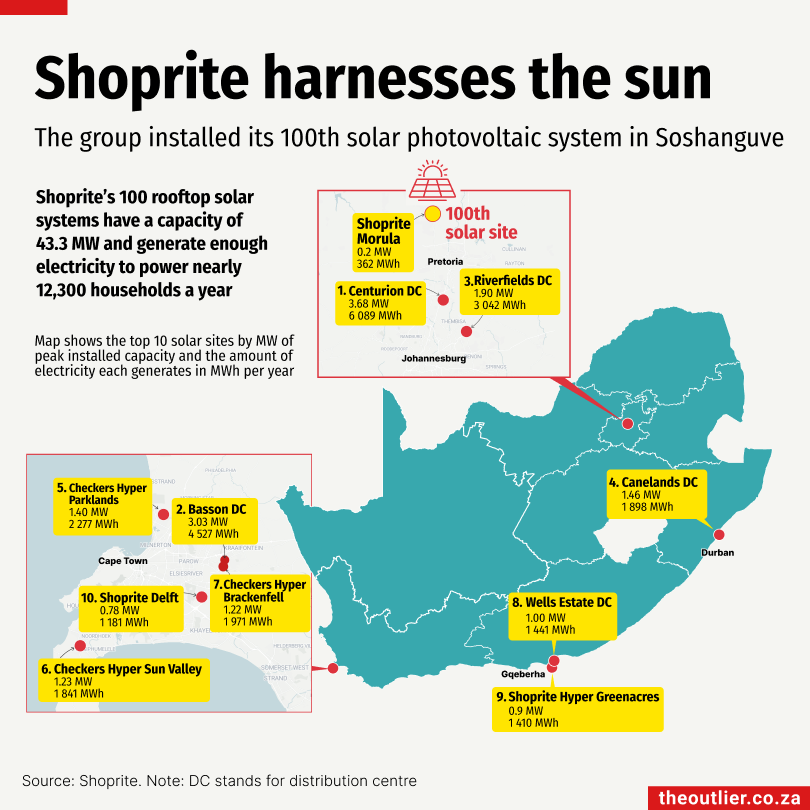
☀️ The Shoprite Group has installed its 100th solar system. This brings its total installed PV capacity to just over 43.3 MW, enough clean electricity to power nearly 12,300 households a year.
EVENTS & RESOURCES
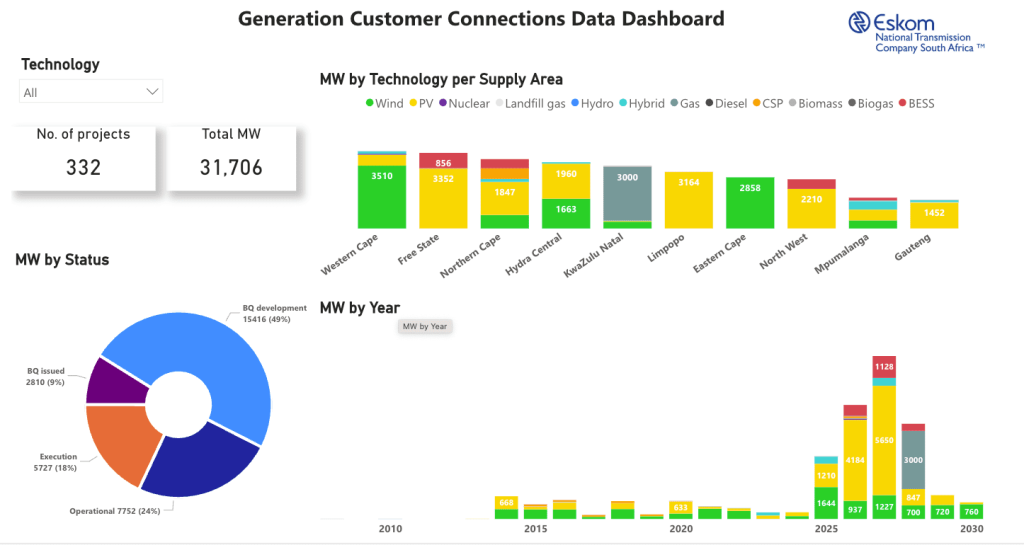
 The National Transmission Company South Africa’s Generation Customer Connections Data Dashboard is a high-level view of generation projects seeking connection to the national grid. It shows a total of 332 projects, with a total capacity of more than 31,000 MW of which just over 7,700 MW are operational.
 Engineering News’ two-part series on SA’s energy outlook for 2026 kicks off on 28 January with a look at sustaining reform momentum in the sector. Part two will be held on 3 February and will discuss investment in SA’s electricity transmission grid.
 Solar & Storage Live Africa returns to the Gallagher Convention Centre from 25 to 27 March. The exhibition will feature more than 650 solution providers showcasing technologies across solar generation, energy storage, power electronics and smart energy systems. Alongside the exhibition will be a three-day conference. Outlier Renew is a media partner for the event. To register to attend the exhibition and conference for free you can register here.
 ️The Africa Energy Indaba will be happening at the Cape Town Convention Centre on 3 – 5 March.