 Cutting the knot
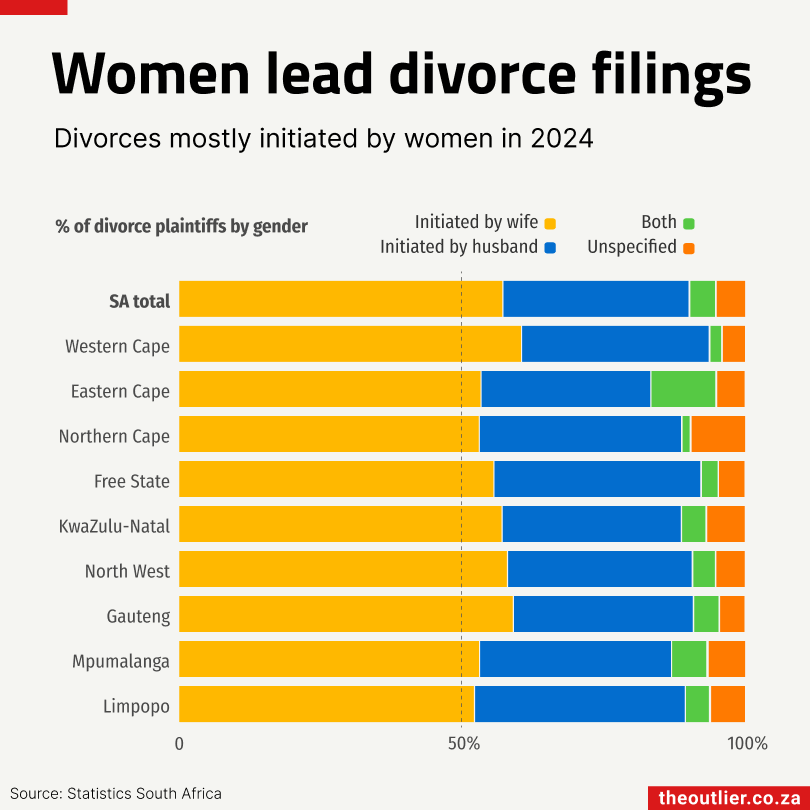
The majority of divorces in South Africa are initiated by women. Data from Statistics South Africa show that 52% of divorces in Limpopo in 2024 were initiated by the wife. This increases to 60% wife-initiated divorces in the Western Cape.
Divorce rates peak in midlife, particularly between the ages of 35 and 49. The highest number of divorces are in the 40-44 age group. And while women tend to get divorced younger, men dominate filings in older age groups.
Most divorces also come from the first marriage. Men however are more likely to get divorced more than once, with 2,307 men and 1,799 women recorded as getting divorced more than once.
 ️ Lights on
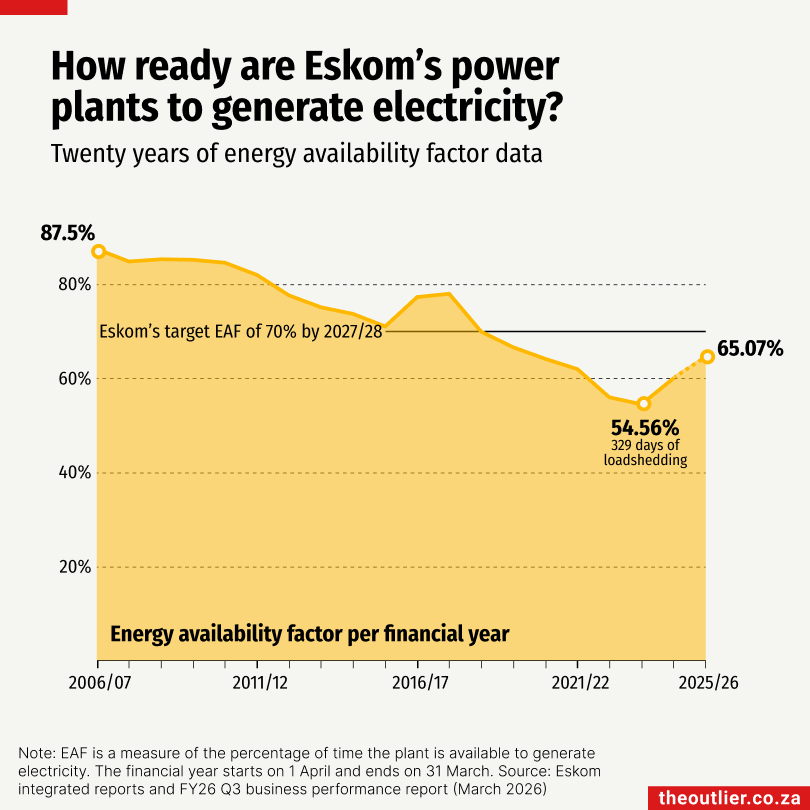
Eskom’s Energy Availability Factor (EAF), the percentage of time its plants are available to generate electricity, tells a sobering story. From a healthy 87.5% in 2006/07, availability dropped steadily over the following decade and a half, bottoming out at a concerning 54.56% in 2023/24, a period marked by 329 days of loadshedding.
But the tide appears to be turning. In 2024/25, Eskom’s EAF recovered to 60.60%, underpinned by 310 consecutive loadshedding-free days and a meaningful reduction in unplanned outages.
By 2025/26, the improvement accelerated. Eskom reported an EAF of 65.07% for 2025/26, and said the generation fleet achieved or exceeded the 70% EAF milestone on 83 occasions.
The utility has set targets of 70% EAF by 2027/28, a critical goal for long-term grid reliability. The last time Eskom had an annual average EAF of 70% or above was 2017/18.
 Pay up
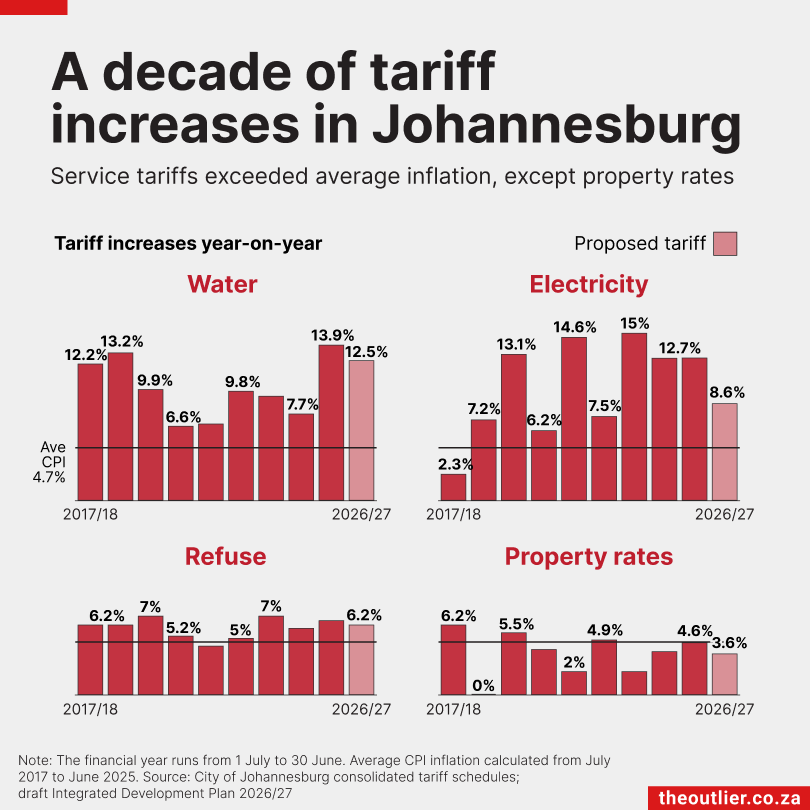
Johannesburg’s proposed tariff increases for 2026/27, 12.5% for water and 8.6% for electricity, are straining residents’ ability to afford basic services, the city acknowledges in its draft Integrated Development Plan (IDP).
Tariffs fund service delivery and infrastructure, but because the city buys water from Rand Water and electricity from Eskom, which have proposed their own tariff increases of 11% and 8.6% respectively, the increases are largely passed on to consumers. The city warns that this is already pushing residents who can afford it to buy boreholes and solar power.
The revenue pressure is worsened by significant internal losses: 44.7% of water went unbilled in 2024/25 due to leaks, bursts and illegal connections, while electricity distribution losses hit 27.1%. The city calls this “revenue forgone”. Notably, the city froze property rates in 2018/19, the one time in a decade it offered relief when water tariffs rose 13.2%.
To close the gap between revenue and expenses, Johannesburg is pursuing active revenue enforcement. Cracking down on illegal outdoor advertising is projected to unlock R300-million a year, for example. There’s also Metro Trading Services Reforms, developed with the National Treasury, which will ring-fence utility finances and make water, sanitation, electricity and refuse services self-funding by decade’s end. The city also plans to deploy artificial intelligence and sensors to curb water leak losses. Plus it wants to diversify its energy mix through independent power producers.
- Produced in partnership with Our City News
 Unplugged
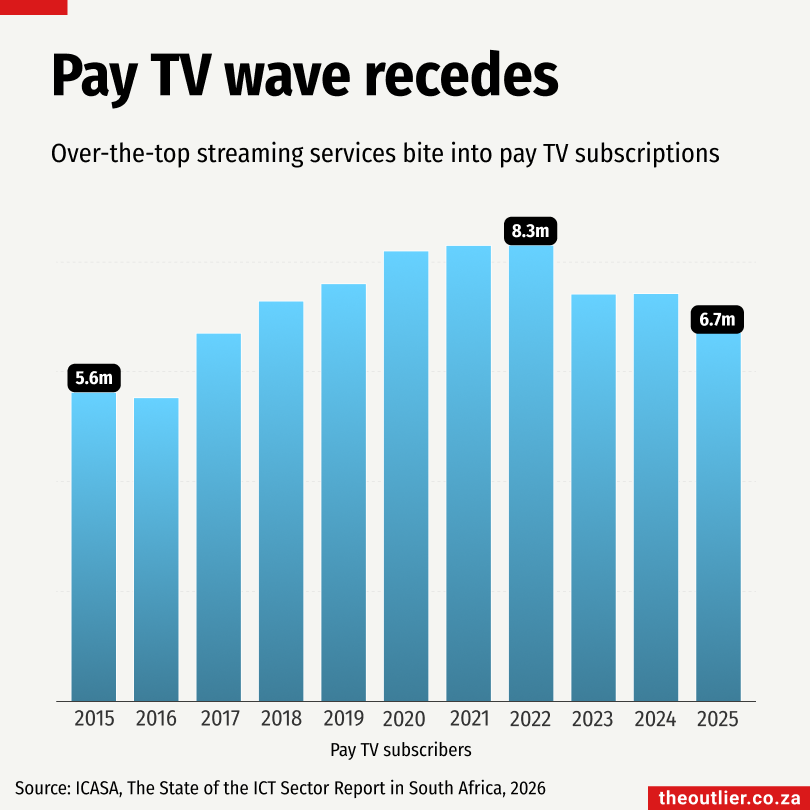
South Africans are cutting the cord, and they’re not looking back. Pay TV lost nearly 10% of its subscribers in 2025, dropping from 7.4-million to 6.7-million. Subscribers in 2025 were down 20% on the peak of 2022, according to the latest ICASA State of ICT Sector Report 2026.
The culprit? Streaming. Over-the-top (OTT) platforms let viewers watch what they want, when they want, without being locked into pricey bundles. And faster, more affordable internet has only made the switch easier.
It’s not just about convenience, though. Pay TV subscriptions remain stubbornly expensive: DSTV’s premium stream costs R700/month and almost R1,000/month for a decoder-based service. This compared with the R229/month for premium Netflix.
Sports fans in particular have few alternatives to DSTV. Sport remains one of DSTV’s primary lock-ins. But as more direct-to-consumer vertical services like F1TV roll out even the sports bundle offered by pay TV operators will come under increasing pressure.
Webinars
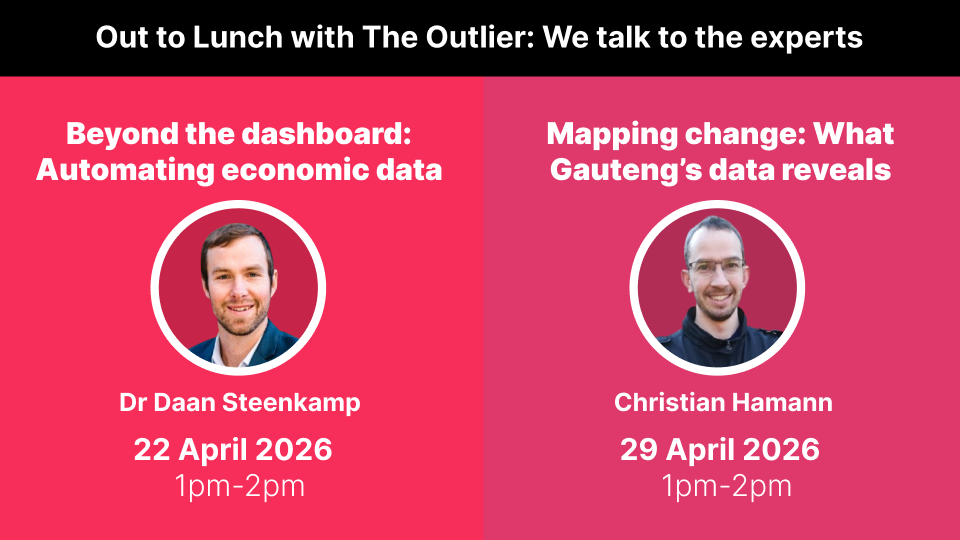
📢 We have two exciting webinars planned for the next two weeks.
On 22 April at 1pm, Dr Daan Steenkamp from Codera will talk to us about how they automate the journey from raw economic data to daily insights. Codera is doing interesting work in making economic data more easily accessible, so this will be a fascinating discussion.
Then on 29 April at 1pm, Christian Hamann from the Gauteng City-Region Observatory (GCRO) will show how the team there transforms results from its flagship Quality of Life survey into insights on the Gauteng city region.
We look forward to seeing you there! Have any questions ahead of the talk? Email gemma.ritchie@theoutlier.co.za.
Live attendance is free. Outlier members will get access to the recording of the webinar after the event.
Inside Stats SA’s data visualisation team
Statistics South Africa (Stats SA) publishes around 250 statistical releases a year — GDP, inflation, unemployment, poverty lines, census data — covering the full sweep of South African life. But the numbers alone rarely reach ordinary people. That’s the problem Kevin Parry’s data visualisation team exists to solve. We spoke to Kevin last week in our Out to Lunch webinar.
Read the summary of the webinar or watch the recording (members only)