
The Outlier moved our base from Johannesburg to Cape Town at the end of March and it’s interesting how different things are in these two cities. In Joburg, power outages were an issue for us. In Cape Town they’re not (so far). In Joburg, businesses are investing in massive solar installations to secure energy supply. They are also doing that in Cape Town, but the difference here is that the city is facilitating the wheeling of renewable energy through the municipal grid. There’s more about that below.
But now for some charts. Ember, a think tank that produces very useful datasets on global electricity generation, recently released its Global Electricity Review 2026 (link is to a PDF). Ember’s yearly data shows that Egypt generated more electricity than South Africa in 2025. South Africa has held the number one spot on the continent since at least 2015 (when Ember’s data starts).
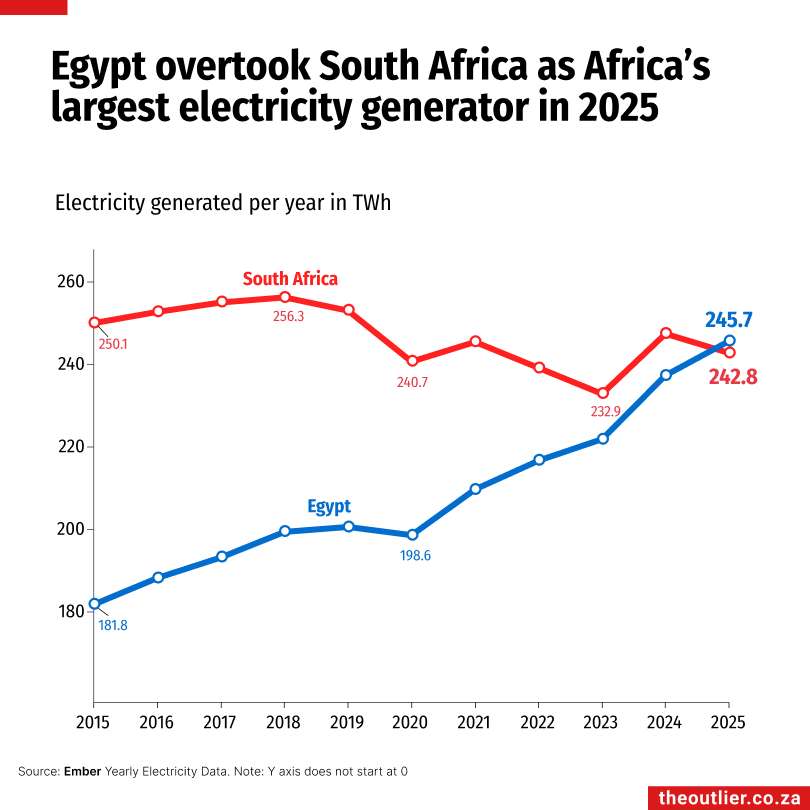
Electricity generated in South Africa in terawatt hours (TWh) has decreased by about 3% since 2015, according to Ember’s data. Egypt’s has increased by 35% in comparison.
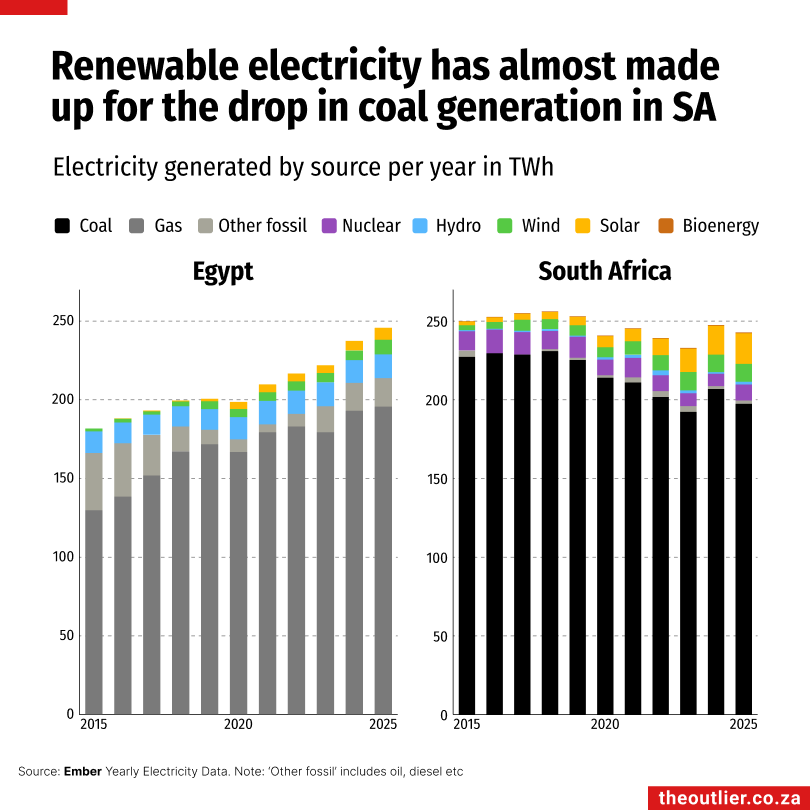
Egypt’s growth has been fuelled largely by fossil fuels, mostly gas. Its renewable electricity share has grown from 8% to 12% over the past decade. Hydro power from the Aswan Dam has been the main source of renewable electricity, but last year wind and solar generated slightly more than hydro.
South Africa is a different story. Renewables grew to 13.6% of the electricity mix in 2025 from 2.6% in 2015. In terawatt-hours, it’s an increase from 6.5TWh in 2015 to 33TWh in 2025. However, coal generation has fallen by 29.8TWh over the decade, which means it looks like renewables have displaced coal rather than meeting new demand.
RENEWABLE PIN-UP
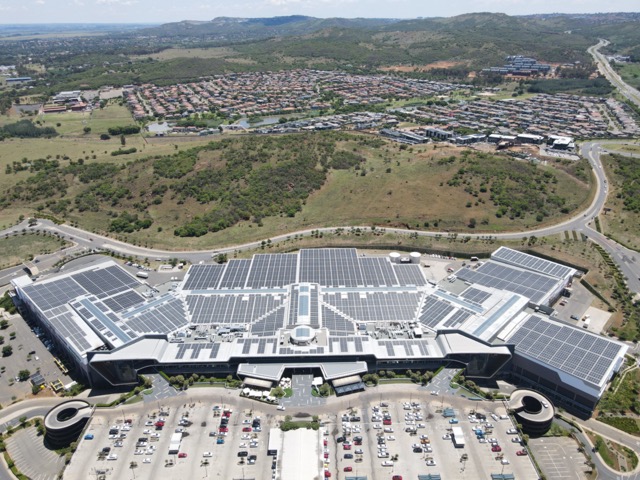
Redefine Properties’ solar installation on the Mall of the South, Johannesburg (Photo: Supplied)
Redefine Properties announced this month that it has installed 62MW of solar PV since 2015. The picture above shows the roof of the Mall of the South in Johannesburg, one of 77 Redefine properties that have solar installations.
Vital statistics
Redefine Properties
First solar installation: 2015
Properties with solar: 77
Total solar panels installed: 156,048
Area covered by solar panels: 360,053 m²
Annual production: 106,516,000 kWh
BESS (Battery Storage): 1 operational system, with Phase 1 rollout of 20MWh approved and 5 projects underway
Redefine Properties’ largest solar plant is 7,014kW DC on the roof of the Massmart Distribution Centre in Cape Town. When it is commissioned, Redefine Properties says it will be able to wheel the power it generates to its buildings in Cape Town through the City of Cape Town’s wheeling pilot [more on this below ⬇️].
NEWS WRAP
⚡️ Electricity trader Etana Energy and Growthpoint Properties have started the first pooled wheeling project in the City of Cape Town. Pooled wheeling allocates electricity from remote generation sites to a portfolio of customers on a grid, matching supply and demand across the portfolio, rather than site by site.
The Boston Hydroelectric Plant, near Clarens in the Free State, which is co-owned by Serengeti Energy and Growthpoint, generates the electricity. Etana Energy is its exclusive offtaker.
The electricity is wheeled across the Eskom network to Cape Town’s municipal grid, where it is allocated to a pool of five Growthpoint properties – 36 Hans Strijdom foreshore building, Constantia Village Mall, Centennial Place in Century City, Montclare Place in Claremont and Newlands on Main.
Etana Energy acts as the single point of accountability, managing and settling variable electricity charges across the portfolio of customers. This simplifies billing for the municipality and customers, and gives customers access to competitively priced renewable electricity.
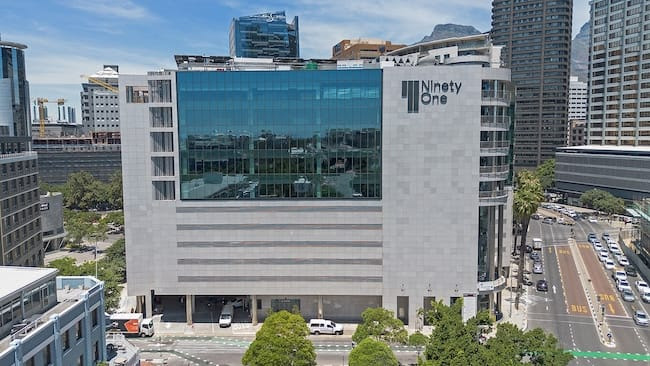
36 Hans Strijdom on Cape Town’s Foreshore is fully powered by renewable energy. Occupied by Ninety One, the office building sources 100% of its grid electricity through the pooled renewable allocation.
Timeline of wheeling in Cape Town
First pilot project (September 2023 – early 2025). The pilot involved three traders (Enpower Trading, Etana Energy and Equites Fund Property), three generators (FairBridge Mall in Brackenfell, Constantia Shopping Mall, and Equites Property Fund in Parow Industria) and three offtakers (Shoprite head office in Brackenfell, Growthpoint Properties in the city Centre, and APF Portside in the city centre). 562,800kWh of renewable electricity was wheeled during the pilot phase.
Full rollout (from March 2025). In March 2025, the City of Cape Town officially announced the opening of Cape Town’s wheeling programme, promoting the scaling up of power trading across the grid based on bilateral and multilateral trading agreements. By September 2025, the total electricity wheeled had reached 861,162kWh.
☀️ Eskom has broken ground on a 75MW solar project at its Lethabo coal plant in the Free State, a R1.2-billion investment expected to produce about 147GWh of electricity a year once fully operational. The project is the first in what Eskom describes as a pipeline of at least 2GW of renewable energy and storage projects to be developed during 2026.
The utility has identified another 17 projects across its coal station footprint, with construction expected to begin by 2028. Together, these could deliver roughly 6GW of new capacity by 2030 at sites including Arnot, Duvha, Majuba, Komati and Kusile.
The work falls under Eskom Green, a new subsidiary tasked with diversifying the utility’s generation mix away from coal as part of South Africa’s energy transition.
☀️ Norsk Renewables has agreed to sell the 315MW Nyakallo solar and battery storage project in Limpopo to SolarAfrica. The project has reached key early-stage milestones, including grid connection, permitting and initial design. Norsk Renewables will continue to support development, financing preparation and commercialisation activities. Financial close is expected to be reached in 2027 and it is expected to start supplying electricity to the grid in 2028. A combination of large anchor customers and energy traders is expected to buy the electricity generated.
💩 A $4-million development funding commitment from Climate Investor Three’s SA-H2 Fund will kick-start South Africa’s first waste-to-fuel facility in Gauteng’s Vaal Special Economic Zone. The project, developed by Green eFuels Producers, will convert 90,000 tonnes of municipal sewage sludge annually – sourced from the Sebokeng Wastewater Treatment Works – into roughly 14,300 tonnes of green methanol, powered by 50MW of co-located solar and additional wind energy. Financial close is targeted for 2027. The target to start operating is 2029.
🇪🇹 China’s Ming Yang Group is set to invest $14-billion in renewable energy projects in Ethiopia. The first phase involves a $7.47-billion investment to build 8.4GW of wind and solar electricity generation capacity in the South Omo, Afar and Somali regions. The second phase involves a $7.3-billion investment in green ammonia production, electricity transmission and the manufacturing of wind power equipment.
EVENTS
💻 Webinar: Creamer Media is hosting a webinar on embedding ESG (environmental, social and governance) in SA’s value chains on 17 June 2026. Register here.