A look at this week’s news with data.
🤖 AI divide
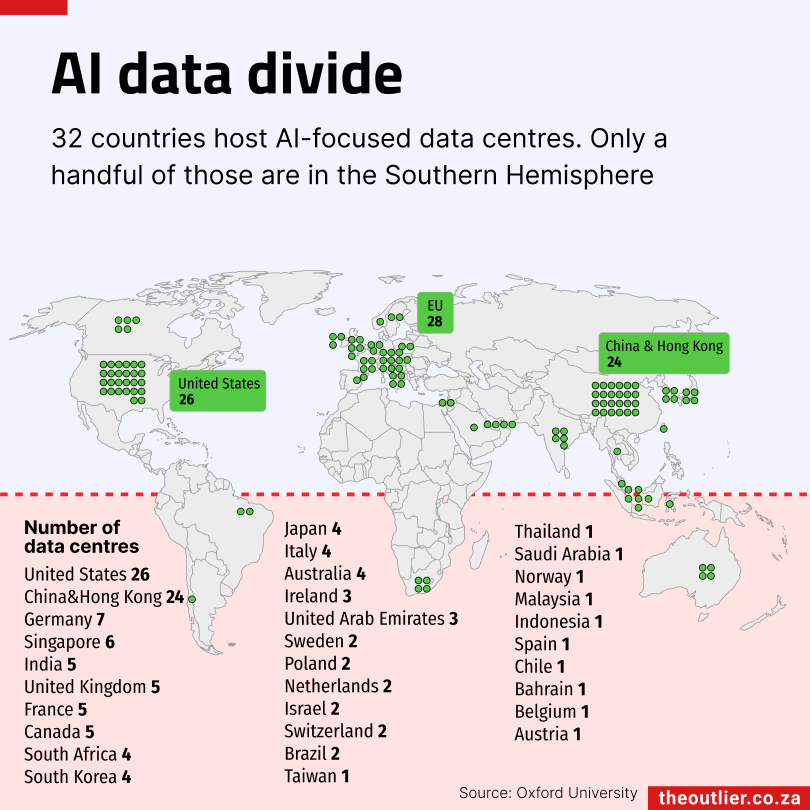
Only 32 countries in the world host AI-focused data centres and fewer than 20% of those are in the Southern Hemisphere. The vast majority of the data centres are clustered around Europe and the UK, in the United States and in China. 90% of the world’s AI data centres are controlled by either the US or China.
A new study from Oxford University has sparked many and much-needed debates about the future of AI and who ultimately controls it and who has access to it. The entire continent of Africa, apart from a pocket South Africa, and most of South America has none of the infrastructure required to build, train and run AI models.
As University of Pretoria’s ABSA Chair of Data Science Vukosi Marivate says: “This divide isn’t just about technology. It means limited innovation, lost competitiveness, brain drain, lack of data sovereignty, and the economic benefits of AI flowing elsewhere. Access to compute is no longer optional—it’s essential for digital sovereignty and for shaping our own AI future.”
💰 Foreign interest
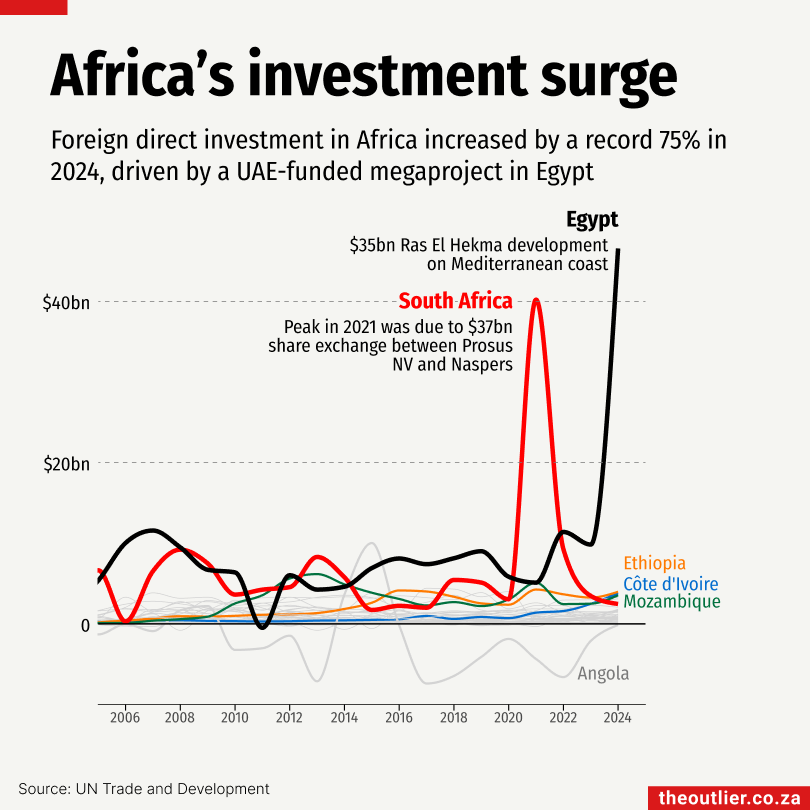
Foreign direct investment (FDI) in Africa jumped by a record 75% in 2024, according to UNCTAD’s World Investment Report 2025. The increase was driven by a $35-billion megaproject backed by the United Arab Emirates. The size of the investment made Egypt the top African recipient of foreign direct investment and the ninth-largest globally.
South Africa ranked seventh in Africa, behind Ethiopia, Côte d’Ivoire, Mozambique, Uganda and the Democratic Republic of Congo.
Angola’s FDI has been in negative territory for the past few years due to repatriation of investments by foreign companies, especially in the oil sector.
🍞 Bread basket
Partner content
🛢️ Barrel of trouble
Iran is one of the world’s top crude oil producers, averaging 5.1-million barrels per day in 2024. When Israel launched its war with Iran, oil prices spiked amid fears of supply disruptions.
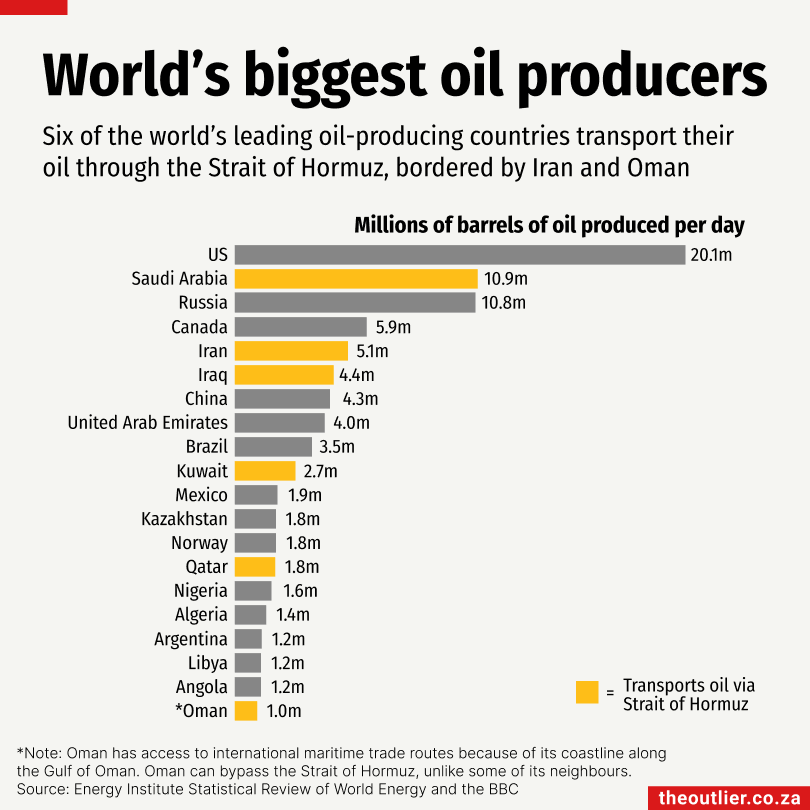
Part of that anxiety stems from geography: Iran borders the Strait of Hormuz, a critical maritime chokepoint through which a fifth of the world’s oil supply passes en route from the Persian Gulf to the Gulf of Oman.
Six of the world’s biggest oil producers – Saudi Arabia, Iran, Iraq, Kuwait, Qatar and Oman – rely on Hormuz to export their oil, most of it bound for Asian markets.
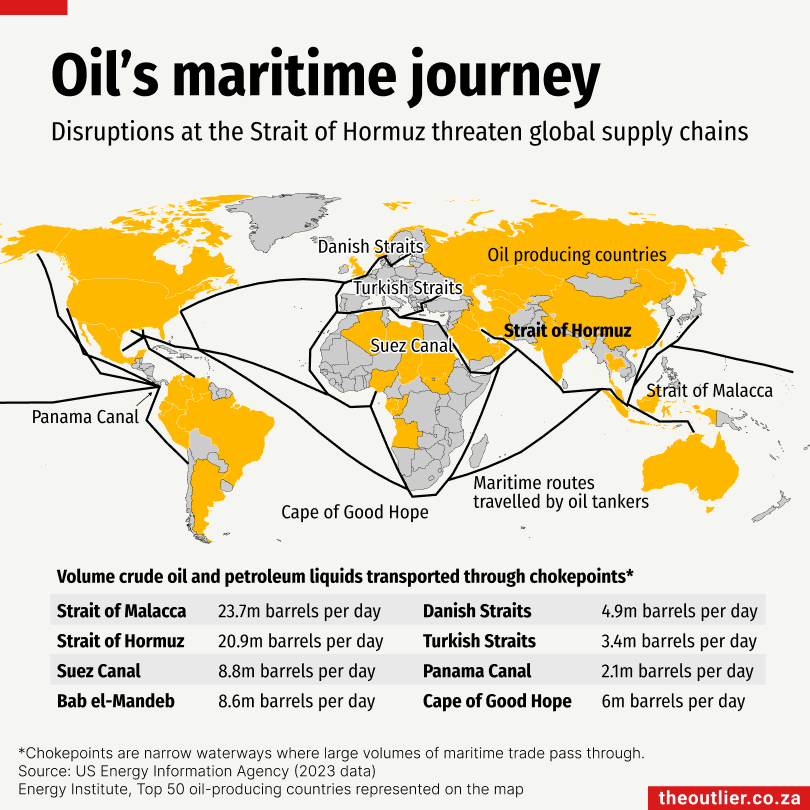
ensions escalated further when the United States bombed Iran’s nuclear facilities on 22 June 2025. Fears mounted that Iran would retaliate by blocking the strait.
The Strait of Hormuz is the second-busiest oil transit route in the world, after the Strait of Malacca. In 2023, 20.9-million barrels of crude oil and petroleum products moved through Hormuz daily, compared to 23.7-million through Malacca.
What would this mean for South Africa?
South Africa imports most of its petroleum and crude oil from Nigeria and Saudi Arabia.
In 2023, South Africa imported $2.28-billion from Nigeria (46.1%) and $1.62-billion from Saudi Arabia (32.7%), according to Harvard’s Atlas of Economic Complexity.
In June 2025, Saudi Arabia was exporting 7.2-million barrels per day through the Strait of Hormuz. A blockade or disruption there would likely have pushed up global oil prices – and South Africans would have felt it at the pump, with rising fuel costs rippling through to transport, food and other essentials.
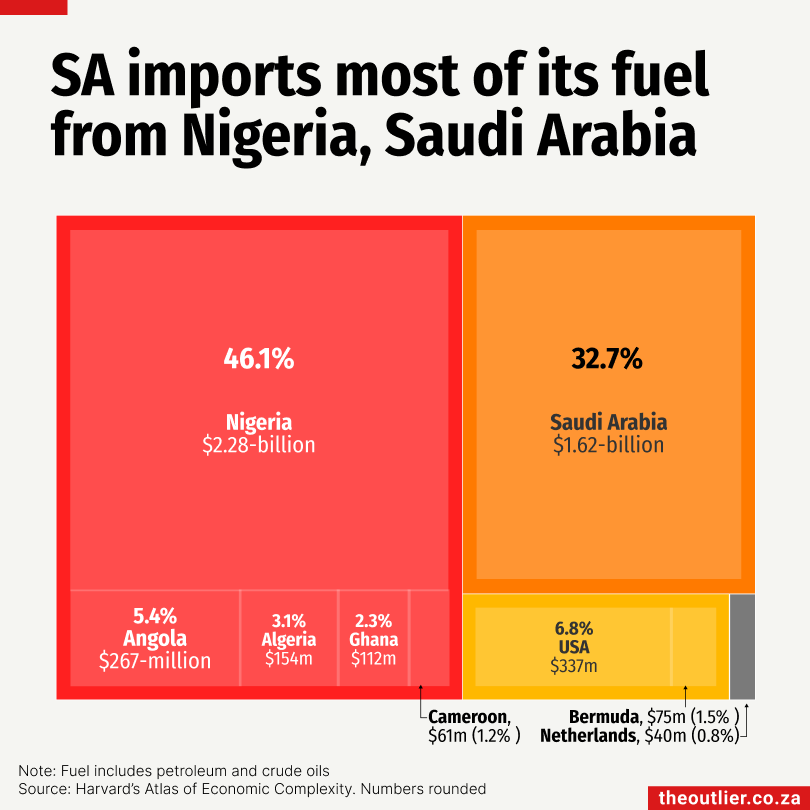
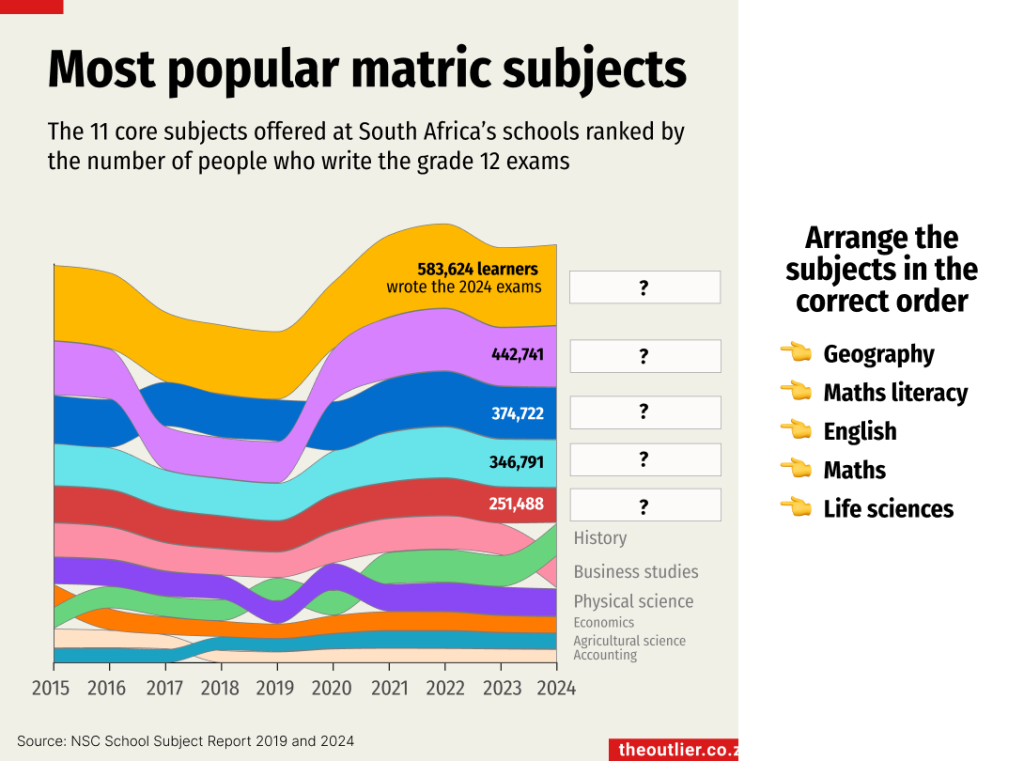
Chart quiz
Can you complete this chart by arranging the subjects in the order most written by South African matric students?