💾 Mega Bytes
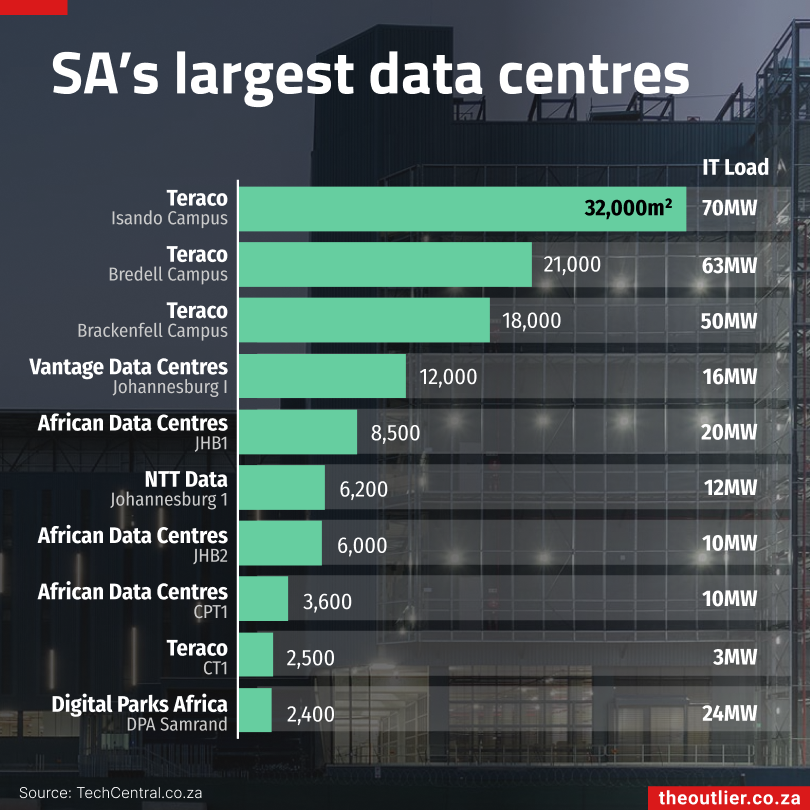
There are 56 data centres in South Africa with a combined load capacity of around 350MW. Five of these data centres are AI-capable which means that South Africa holds roughly 1% of global AI data centre capacity. In contrast, the United States alone is home to around 5,500 data-centres and more than 40% of the world’s AI-capable data centres.
AI-capable data centres typically require significantly more power and cooling than traditional data centres used for web-hosting, virtualisation and cloud computing.
The ten largest data centres in South Africa (ranked by physical size) compiled by TechCentral, account for around 278MW of load capacity, the largest being the Isando campus facility operated by Teraco.
As the demand for data centres increases in South Africa, and particularly the demand for power-intensive AI data centres, the demand for power will increase. Many data centre operators are already building their own energy facilities or wheeling power from other power generators. Teraco is currently building a 120MW solar facility in the Free State.
🔋 Battery storage projects
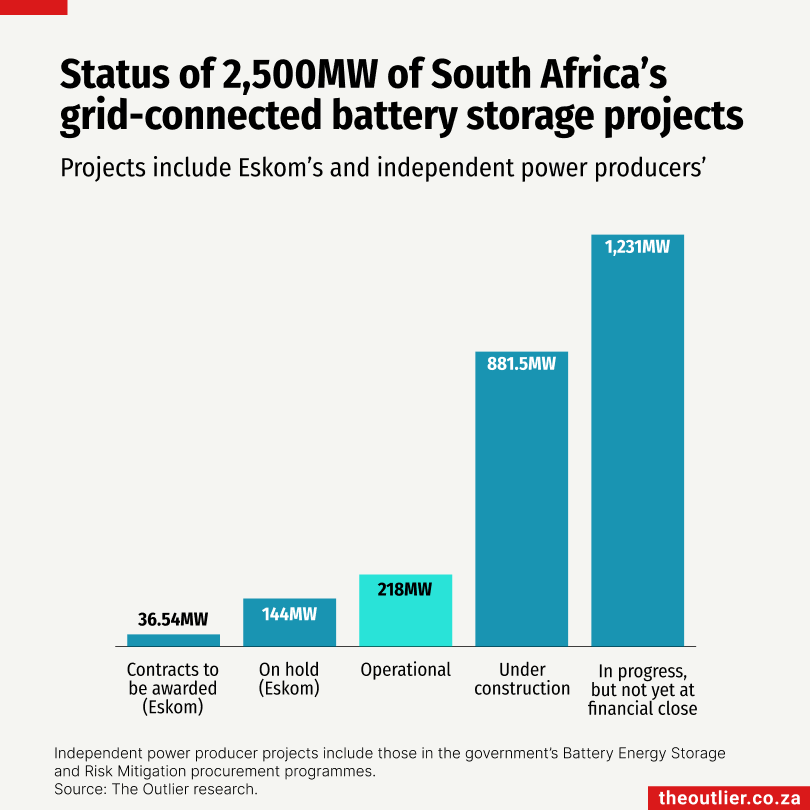
Two-and-a-half years ago the government put out a call to independent power producers (IPPs) to bid to build battery energy storage facilities connected to the national electricity grid. The aim was to add capacity to the Northern Cape, an area rich in solar potential but lacking in grid capacity.
The first preferred bidders were announced in November 2023. Now 18 IPPs have won bids to add battery storage systems to the grid in seven provinces. These projects have brought in investment of R39-billion, according to the IPP Office. That’s an average of R2.2-billion per project. Things are moving fast.
The 18 battery projects will eventually add 1.7GW of capacity to the grid when they start operating. The first ones will start towards the end of next year. They will store energy generated by wind and solar power plants and dispatch it during peak demand periods. It’s an exciting time for renewable energy in South Africa and around the world.
💸 Bad debt
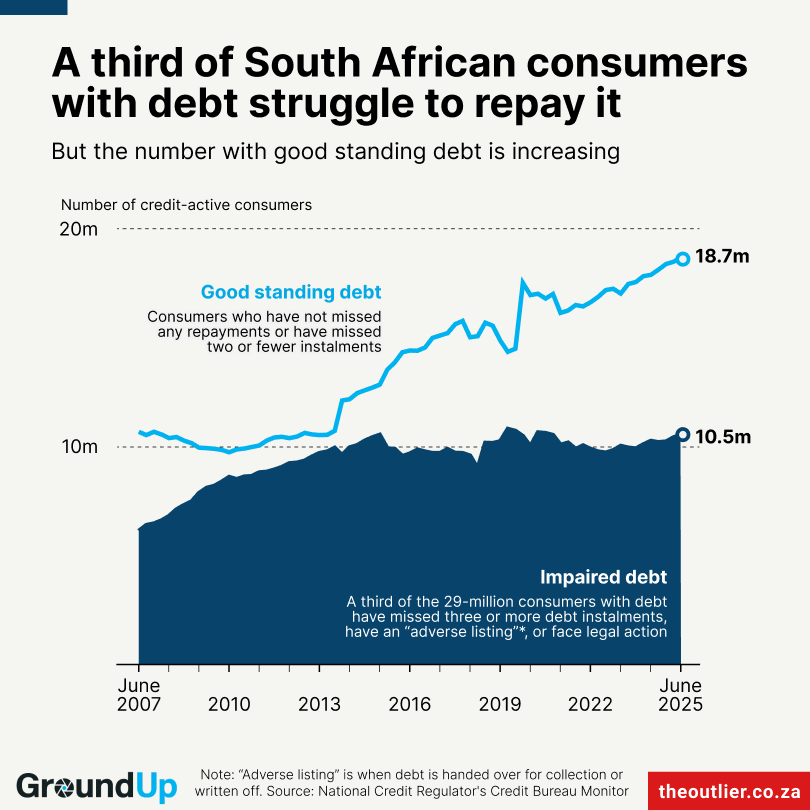
About 29-million consumers (individuals and companies) in South Africa have debt.
Having debt is not necessarily bad. Debt often enables people to improve their lives by providing access to housing, education and business opportunities they couldn’t otherwise afford at the time. It allows companies to invest in infrastructure and improve production.
But more and more South Africans are borrowing money just to survive. The National Financial Ombud Scheme says that credit is shifting “from a tool for upward mobility to a survival mechanism”.
A third of South African borrowers have impaired debt, meaning they have missed three or more debt payments, have an adverse listing on their credit report or face legal action.
The number of consumers with impaired debt has increased from 9.9-million in 2022 to 10.5-million in 2025.
Good news though, is that the number of consumers with good standing debt (those who have missed two instalments or fewer) is also on the increase: 2.1-million more consumers had good standing debt in 2025 than in 2021.
Click here for a link to all references for this newsletter.